Southern-Style
|
|---|
 |
Plant What Will Bloom |
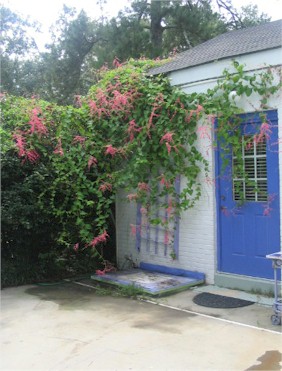
| This Coral Vine provides the "lacy canopy" so
loved by Monet. It also proves that bees LOVE coral vine blossoms.
See Also: |
One seed leads to another and before you know it you’re growing flowers. My friends in the Out to Lunch Bunch are talented and creative people…enough so it could give a person a complex. I guess I took the Master Gardener class because I thought that was where my friend Michele had learned all she knew about Vegetable gardening. She didn’t. She learned it on her own. But, that is how I found myself in a room full of people who knew the difference between a daisy and a weed. It was the best $50 I ever spent. Perhaps I did not always do my homework like I should have. But I carried away from that series of meetings a basic knowledge of the critical elements for making a garden grow and the acquaintance of the foremost gardeners in the area. In other words, I found out where to go and whom to ask to find the answers to my questions. Just after I took the course, Rhoda Boone cornered me in the pansies at Dothan Nurseries and told me she had decided to put her business, Dothan Nurseries, on the Internet. I had approached her earlier about helping her with her web site. We threw around some ideas and tried to come up with content that would draw visitors back to her web site. A friend of ours had just spoken of how successful she had been in planting a Monet Garden in her yard, adapting the plants that had the "look" of those which grew in Monet’s garden to the limitations of our Southern climate. Why not plant one in my front yard where I could take pictures that might help others discern between a dandelion and a daisy? Soon after that the chairperson for the Tour of Gardens called to request that I be a hostess for one of their gardens. "Sure," I said. "But while you’re on the phone, have you seen the Southern Monet Garden we have planted in my front yard? You need to drop by." Before I knew it she had me volunteering to have four hundred guests trek through my yard…not garden…not yet! Fear struck. We live in an old family home on two acres. The Southern Monet Garden would merely be a blip in the total area of my yard! While my mother-in-law had given the yard great bones with magnolias and Japanese maple, azaleas, camellias, crape myrtle, and sasanquas, there were no flowerbeds! I had dug up all the beautiful chrysanthemums and daisies she had planted years ago thinking they were weeds! What had I done? Rhoda and her crew were going to plant the Southern Monet garden, but that left vast areas of potential humiliation for a novice gardener who had invited serious and experienced gardeners into her "garden," which was yet a yearning and not a reality. I wanted to do this to help promote www.everybloomingthing.com , Rhoda’s web site, and our wonderful Dothan Area Botanical Gardens…but there was no garden yet. Only plans and dreams. I did what any Southern woman would do. Call for help. This is when the real benefit of the Master Gardener course became apparent. I knew whom to call. Christie Thomley and I designed a plan and started flowerbeds without a tiller. We attacked wisteria with a grubbing hoe. We pulled, pushed, pruned, planted and prayed. Finally, my husband became convinced this was not just another of my fads. My permanent "glow" (Southern women do not sweat!) and the dirt that remained in my bathtub after I departed convinced him that I was serious. On our 30th anniversary my husband bought me a tiller. The salesman said it was a first for him. I was the only woman he had ever met that wanted a tiller for an anniversary present.
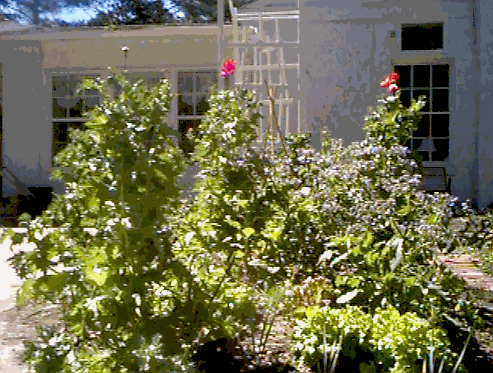
Borage and poppies in the potager
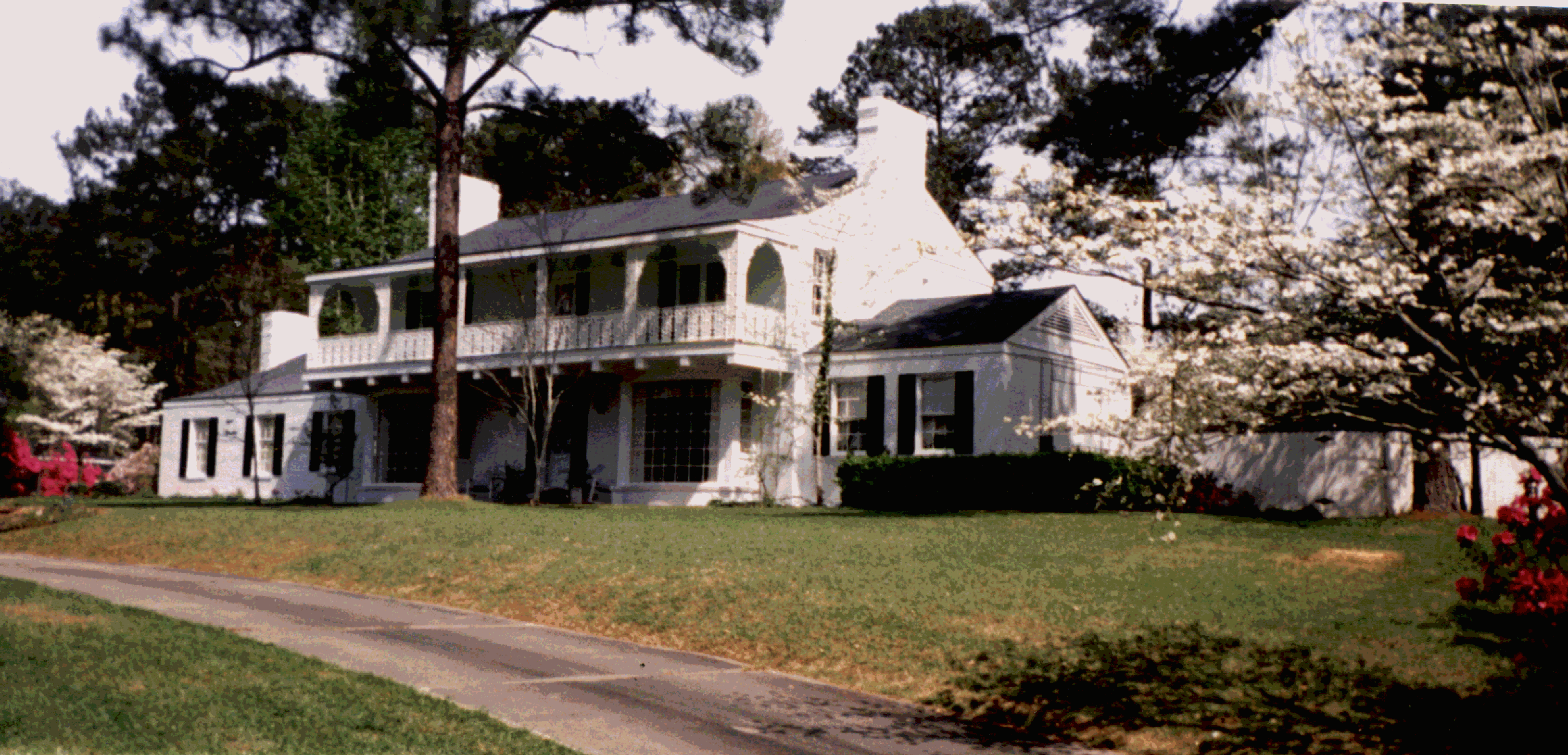
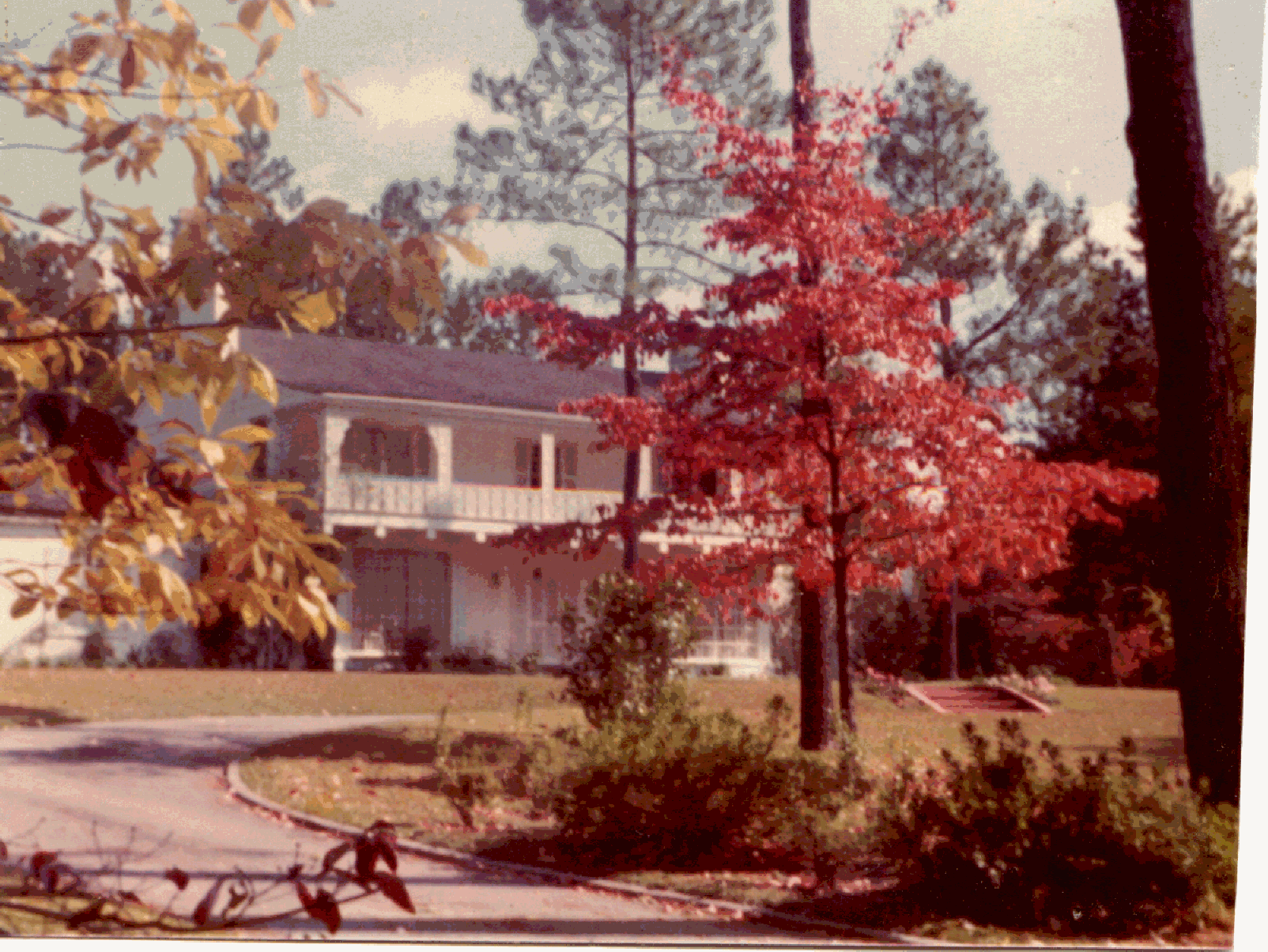
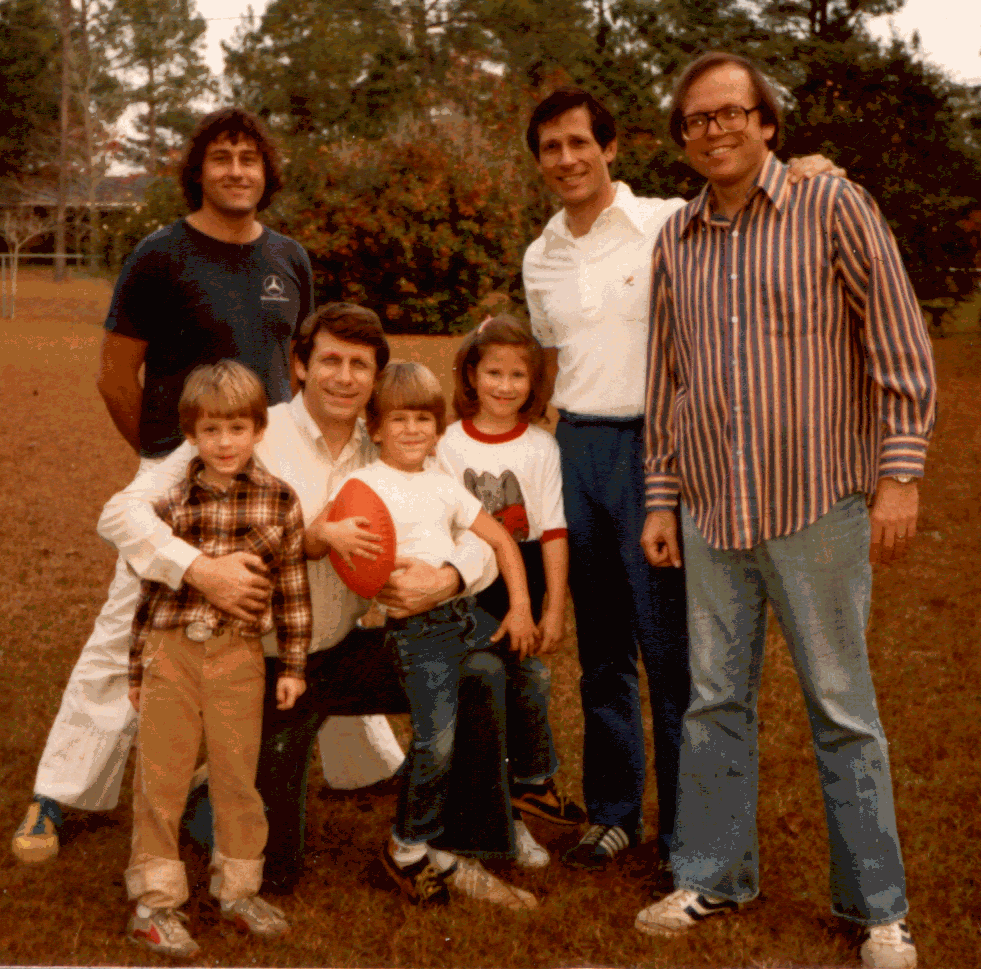
Jim Fancher, Matthew, Joe, Drew, Cecily, Ed and Bill Ramsey Genealogy of the Garden Believe it or not, even Southern gardens have genealogies. We are blessed with the home that my husband moved into when he was four years old, the same age of our oldest daughter when we moved in. My husband’s parents Robert and Hilda Ramsey, built the home in 1950 based on plans drawn for them by Chicago architect Jerome Robert Cerny whose work Hilda Ramsey had admired in a magazine. Local landscape designer Lawton Dye advised the Ramseys on the placement of
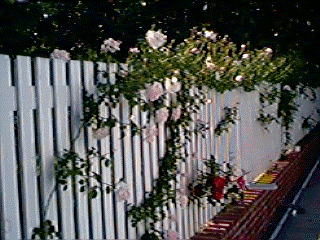
the house on the lot, perhaps the most critical element enhancing the Neighbor Eleanor Grant had once rooted a Walter Van Fleet rose for me that has now taken command of the picket fence. Cuttings from that rose dominate the chain link fence in the potager and grow up the basketball goal in the back yard. Gardening is like cleaning house, once you get started in one place another corner begs attention. The Friendship Garden evolved as other friends contributed seeds and flowers from their yards. The enclosed garden behind the pool is filled with azaleas, sasanqua, ferns, elephant ears, banana palms, coleus, impatiens, artemesia, guarantia salvia, hibiscus, aspidistra and lilies. As one passes through the gate into the backyard the path under the huge magnolia is lined with hydrangea, hosta, azaleas and aspidistra and impatiens. The central flowerbed in front of the greenhouse has a blue gazing globe as a focal point while alyssum, azaleas, sasanqua, aspidistra, hydrangea, salvia, heather, gerbera daisies, fern, sago palm, elephant ears, crape myrtle, and lantana happily prosper under a pear tree along with volunteer perennial petunias. The bench is a mosaic emphasizing the garden’s major focal color, cobalt blue, with tiles left over from the kitchen counter and pieces of blue willow china. On the way to the moon garden, larkspur, artemesia, and daisies are planted with antique roses. Pass through the arch covered with autumn clematis. The moonlight garden has fern, lilies, gardenias, daisies, hydrangea, alyssum, calla lilies, ginger lilies, iris, angel trumpet, and a Confederate rose. Many of these were cuttings, divisions, and rootings from friend’s gardens. The rose arbor was a joint effort between Christie, Shelby and me to make something (anything!) out of a trampoline. American Pillar, Dortmund, and New Dawn roses are being trained up the framework. Cecile Brunner, Perle d’Or, and Gertrude Jeckyl roses grow nearby. Hosta, fern, daylilies, stokesia, and aspidistra are scattered throughout the garden. Aspidistra (from mother’s yard) has been used as a unifying element in planting. Purple coneflower, monarda, lantana, parsley, salvia, and budleia around a
rock water element attract butterflies and birds. Neighbor Louise Rudd shared
coneflower, Texas bluebells and seed of an unnamed lily for the side garden.
They found a home with the larkspur from Katy Maddox, Queen Anne’s lace and
cockscomb from Theresa Dixon, fern from Cynthia Nowell, Poppies, sunflowers, and Mexican petunias join roses, azaleas, daylillies and
canna lilies. Sweet peas climb the old scuppernong arbor . Coreopsis, poppies,
cosmos, iris, daylilies, amaryllis, elephant ears, and fern frame the brick
patio near the potting bench. Generously, one might label this a Monet inspired English garden. Monet was himself inspired by English gardener Gertrude Jeckyl who rejected the formality of traditional English gardens for the lush effusiveness of the cottage garden. However, Monet disdained the artifice of garden ornaments while Jeckyl freely incorporated them in her designs. The "whimsical" additions to theRamsey Garden one friend labeled "shabby chic." Whatever its label, this garden was birthed and nurtured on friendship and an appreciation of a legacy. I learned many things about gardening…and life…from my mentor and friend, Christie Thomley. I learned that one must divide a large project into small parts. Focus on one task at a time, otherwise the task appears insurmountable and one becomes discouraged. I learned that it is important to do the job right the first time so that you do not have to recover the same area again. Till, weed, compost, and fertilize each area before considering any planting. A plot must be prepared properly before a plant can grow. Know your soil. My soil is extremely sandy. That means I
must water more than most to have my garden grow. Because I must water
frequently, nutrients in the compost and fertilizer leach out of my soil
more quickly. Therefore, I must feed my plants frequently. Roses take special care. Christie and her husband Shelby are
certified rosarians. They designed, and along with their fellow members of
the Fill hole with water before gently placing the rose. It is important to disturb the roots as little as possible. Give your roses a good start in growing season. In March, give your roses a feeding of Mills Magic and a topping of Mushroom compost. Take your fork and around the drip line of your plant insert the prongs about three times. Feed them with two cups of Mills Magic and then add a shovel full of mushroom compost for good measure. Fork lightly and water. Cut off the deadwood of your roses. Cut back your tea roses. Add your slow release fertilizer to your beds. (They suggest Nutrakote in the 50 pound bag. It is a 9 month time release fertilizer.) They also suggest feeding your plants frequently with a foliar fertilizer. Add your fertilizer to your sprayer filling to the top with fish emulsion, a combination that is bound to give you healthy plants and bounteous flowers.
|