Downhome Dothan
"All happy families resemble one another…" Tolstoy

Southern-Style
|
|---|
| |
Downhome Dothan |
|
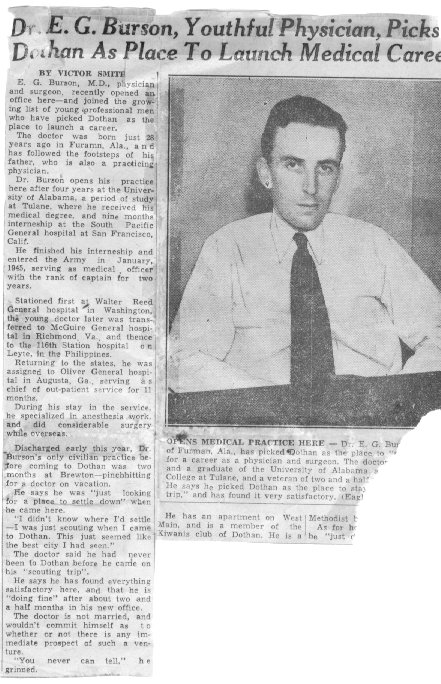
The tan four door 1947 Mercury sedan pulled up to the gas pumps at the corner of Oates and Main. The lean, six foot driver stepped out and lit up a cigarette as he leaned back against the car and introduced himself to Oliver Bentley, the station owner. The two men struck up a conversation and the beginning of a lifelong friendship. When the car pulled out of the station, it headed half a block east down Main Street and parked in front of Dothan Drug Company. "Dothan’s growing and needs doctors," Bentley had told the general practitioner. "Go down and see Grady Watford at Dothan Drug. He’s got offices over the drug store."
It was this conversation that led to Dr. Elkanah George Burson settling in Dothan, Alabama. He practiced medicine above Dothan Drug, down the hall from Dr. Cannady, pediatrician, Dr. Hopkins, ENT, John Martin, attorney and survivor of the Battaan death march, Charles Skeen, accountant, and Quay Fortner, insurance. The really important thing about this location was that Grady Watford and Jim Bottoms at Dothan Drug always had candy for hungry little girls. In 1956, Dr. Burson built an office at 819 South Oates Street where he practiced medicine for 32 years until his retirement in 1989.
This doctor who started the practice of medicine truly "under the gun" found his niche in a rural community and his gift as a family doctor and diagnostician. George Burson attended a three-room schoolhouse for grades 1 through 6, and then graduated from Carlowville High School. Those were depression years and his own father, a country doctor, had little money because his patients had little money. Payment came in produce or land. Often as a child his lunch consisted of a biscuit filled with molasses. Other children had white bread sandwiches with pineapple slices. He’d look at their sandwiches and his biscuits and then made himself a promise…when he grew up he’d be able to afford white bread. He graduated from the University of Alabama and Tulane Medical School in New Orleans, Louisiana.
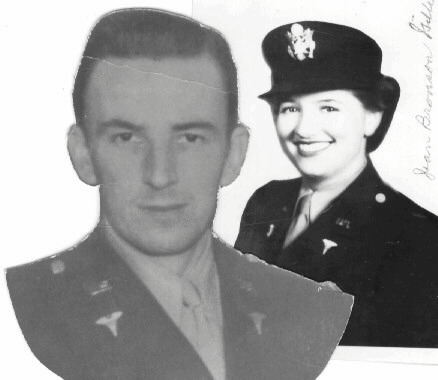
When the war came they speeded up the course requirements in medical school to get more doctors to the battlefields. After a 9-month rotating residency in San Francisco at Southern Pacific Hospital, he immediately entered the U.S. Army where he received training in Anesthesiology in Washington, D.C. at the U.S. Army Medical School at Walter Reed Hospital under Mayo Clinic doctor, Major Mousel. He then served in Leyte, Philippines, at the 116th Station Hospital and was sent home with pleurisy. That time recuperating in an Army hospital set him back in acquiring the residency in neurosurgery he had planned. All the good places were filled. So he came home to Alabama and took a drive around the state. That’s when he bumped into Oliver Bentley.
He came to Dothan as a bachelor, but soon the pretty nurse, Jean Bronson Gillis, whom he had met at Oliver General Hospital in Augusta, Georgia, became his wife. They were married in the living room of her mother’s home.
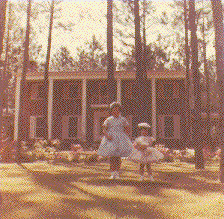
Sharman and Sylvia Burson
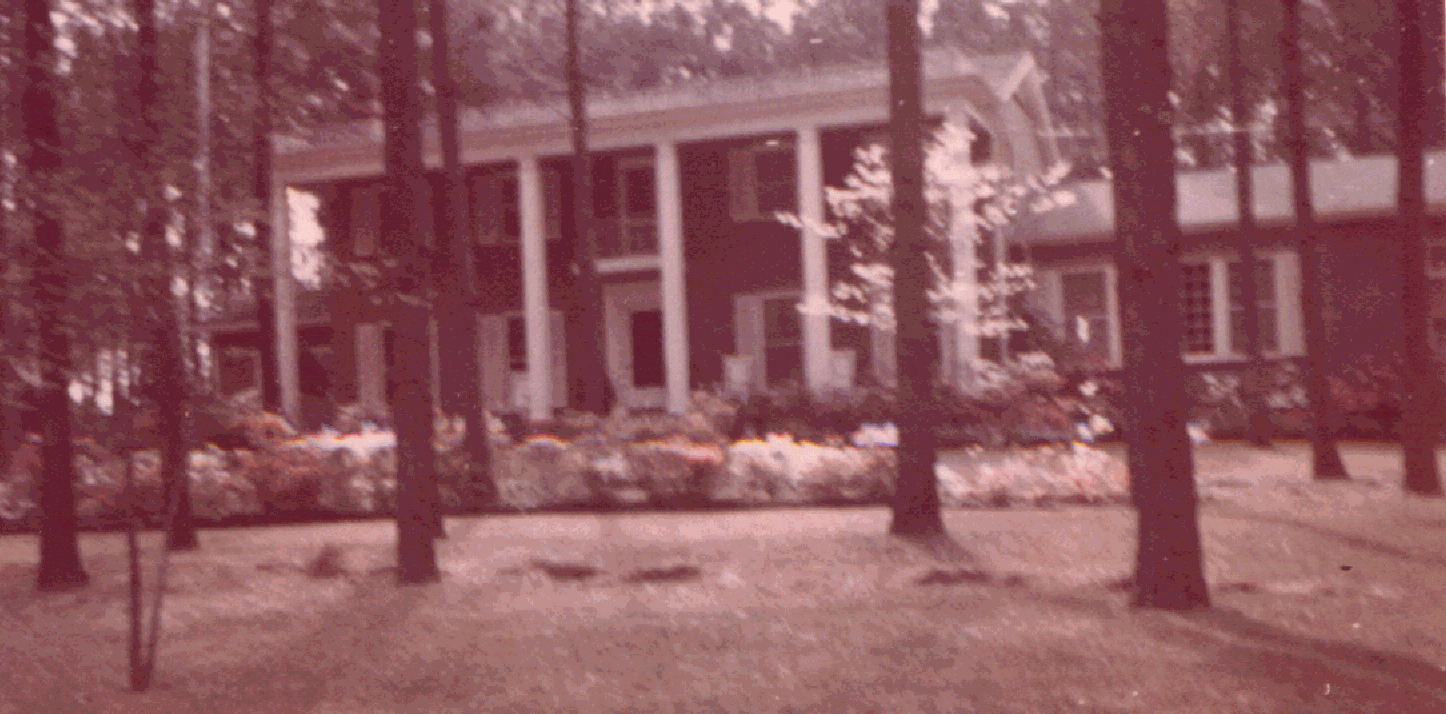
The Bursons built their family home at 105 Camellia Drive after their oldest child burned her foot on a floor heater at their first home on East Westmont.
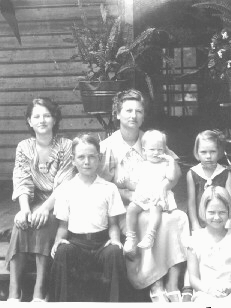
Like his father before him, Dr. Burson was a dedicated physician. He delivered three babies in their homes on his wedding day. He visited patients, driving down dirt roads on rainy days, often having to walk to the nearest farmhouse to ask them to bring their tractor to pull him out of a ditch. In those days, if patients could not pay their bills, they brought produce to the doctor. There was no such thing as payment before service. It was a professional responsibility to care for everyone, regardless of their ability to pay. Dr. Burson, a gifted diagnostician who was popular with his patients, often saw as many as 170 a day. His distinctive southern drawl and genteel southern mannerisms are frequently remarked upon.
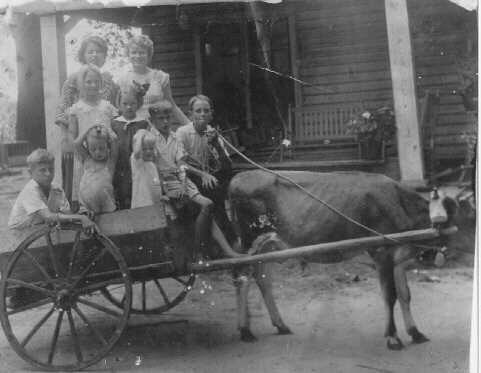
Jean Burson was active in the Dothan Service League, served as Chairman of the Heart Association Fund Drive, and enjoyed her membership in the Daffodil Garden Club. She kept the books for home, office and farm, using bookkeeping skills she had learned as a teenager. She went to work at 13 at a dime store soon after the chain broke on a log truck killing her father, an engineer for the paper company, John Patrick Gillis, leaving a family of five children of which she was the eldest. When the messenger of the bad news arrived at their home my grandmother collapsed. The baby she was holding, Patricia, only three months old, cried and my mother took her in her arms. "Don’t worry," she whispered. "I’ll take care of you," she promised. She tried as well as she could.
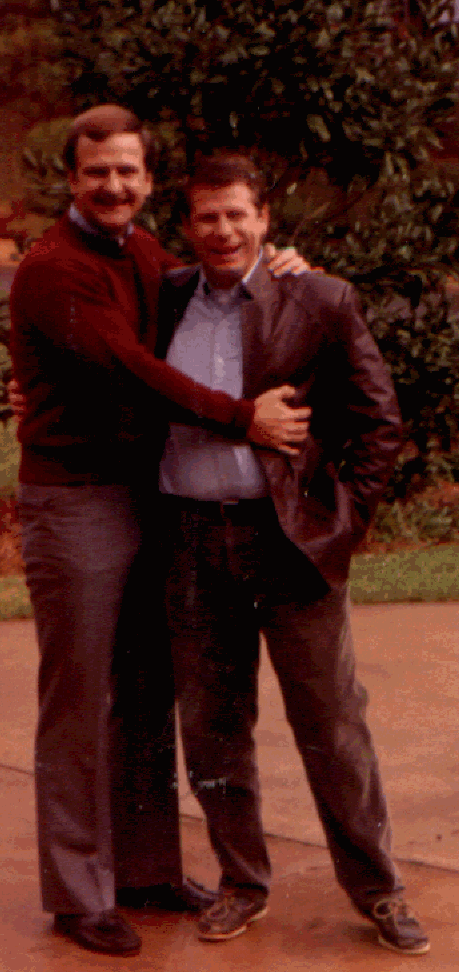
Those Depression years of hardship without the big handsome father everyone loved were formative of the sense of responsibility to one’s family my mother knew and instilled within us. Her brother Jim delivered papers and bought her the suitcase that held her clothes as she boarded the bus for the trip to Montgomery for nursing school. It took courage to sit across the desk from the banker and ask him to trust her with the loan for her education. Much to the Sisters surprise the spirited young woman from Brewton scored the highest of anyone in the state when she took the state board in nursing. Her sense of family extended to her country and her patriotism led her to join the Army where she served aboard a hospital train based out of Cherbourg, France. There she tended soldiers severely wounded on the battlefields of France and in the Battle of the Bulge. A portion of each check was sent home to repay the loan and to help support her family. Ann and Charlie Spann, Debbie Spann above, Charles Spann and Joe Ramsey
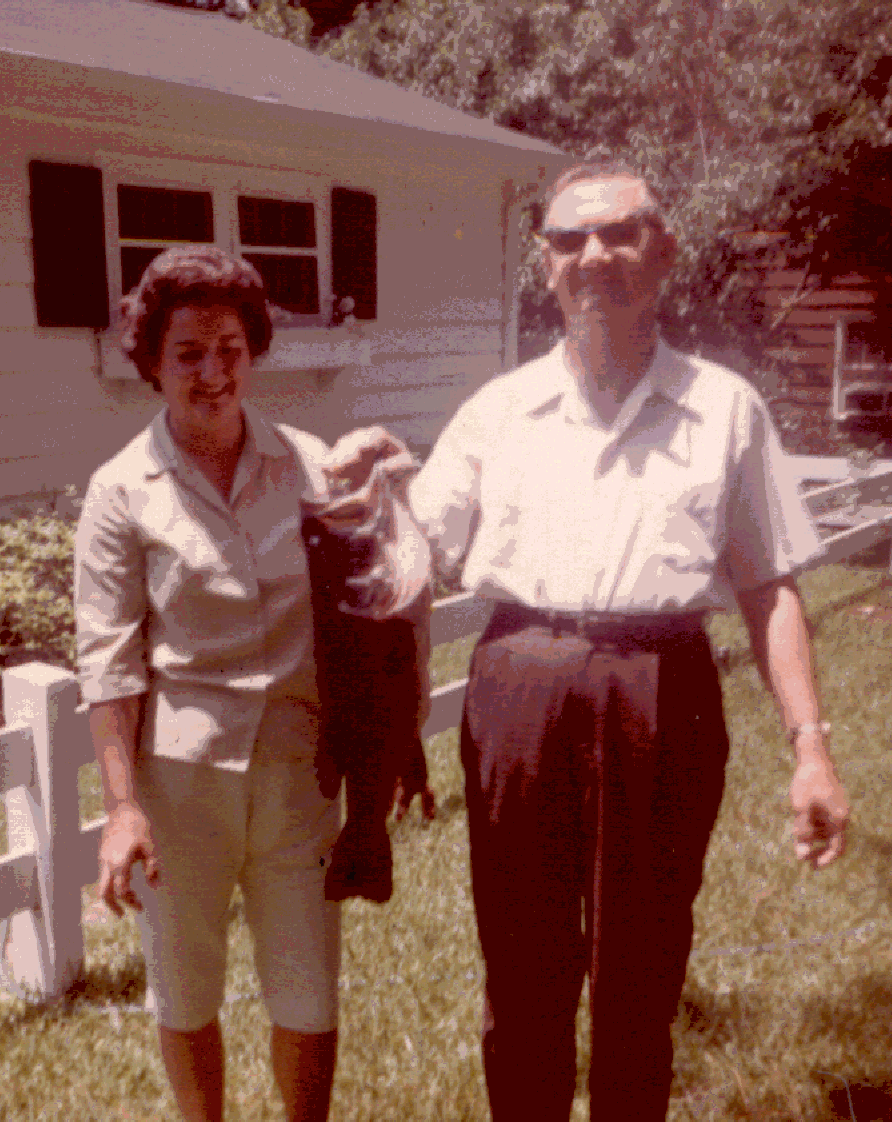
At one time our father’s hobby was boating. Dr. Charles Spann, a very gifted surgeon who died at 49, was his favorite companion on those trips. Ann Spann shared our mother’s love of gardening. Dr. Spann’s daughter Debbie was my best friend. It was at Dr. Spann’s funeral that I met my future husband, Tommy Spann’s best friend.
Our father’s major interest outside of medicine was cars. His first car was a Black two door Plymouth that he bought at Matthew Hardware in Camden, Alabama for $470. Time and events were marked in his life by the car he was driving at the time. Bill Waters at Dothan Lincoln Mercury looked for him to drop by about twice a year to trade cars.
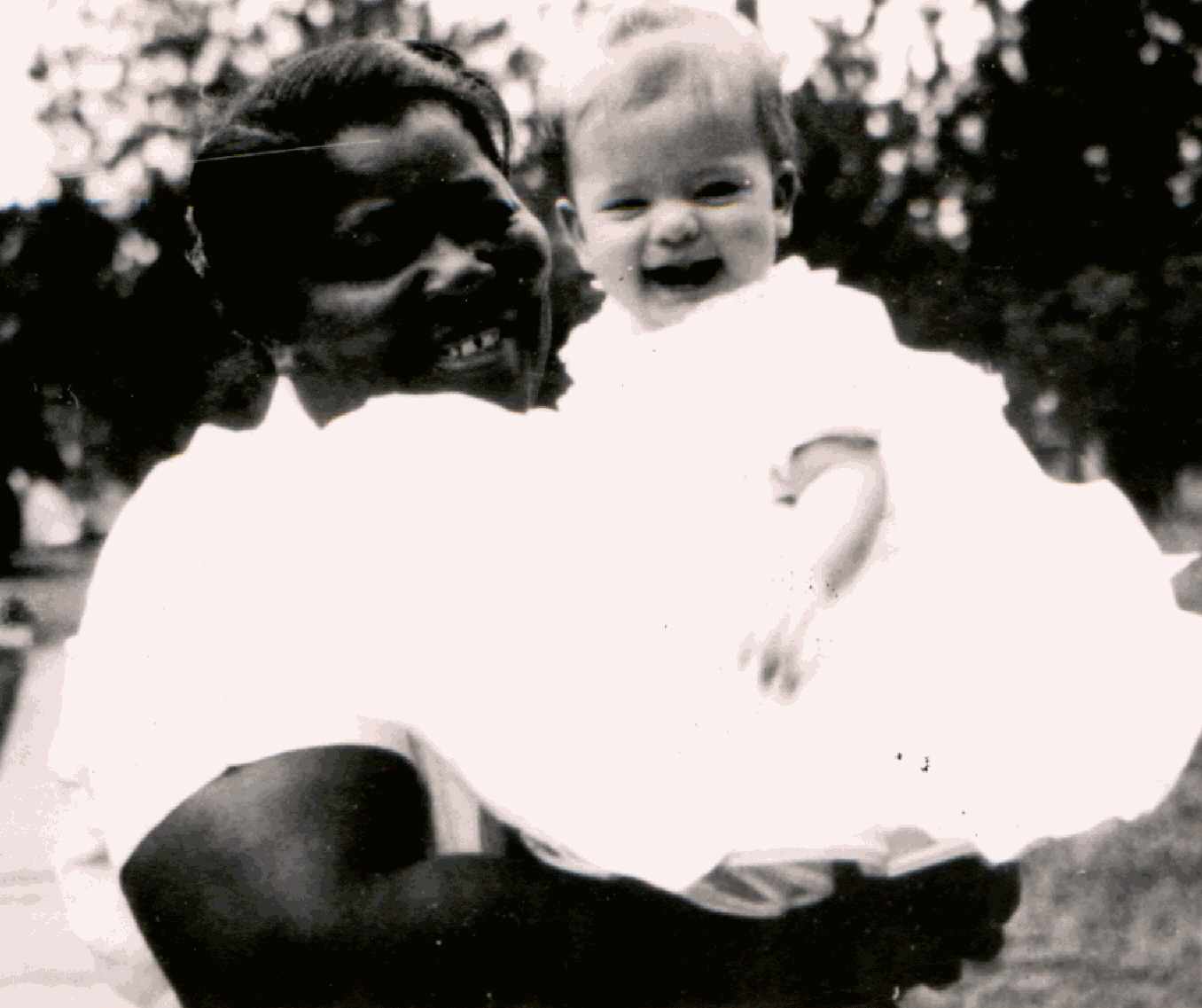
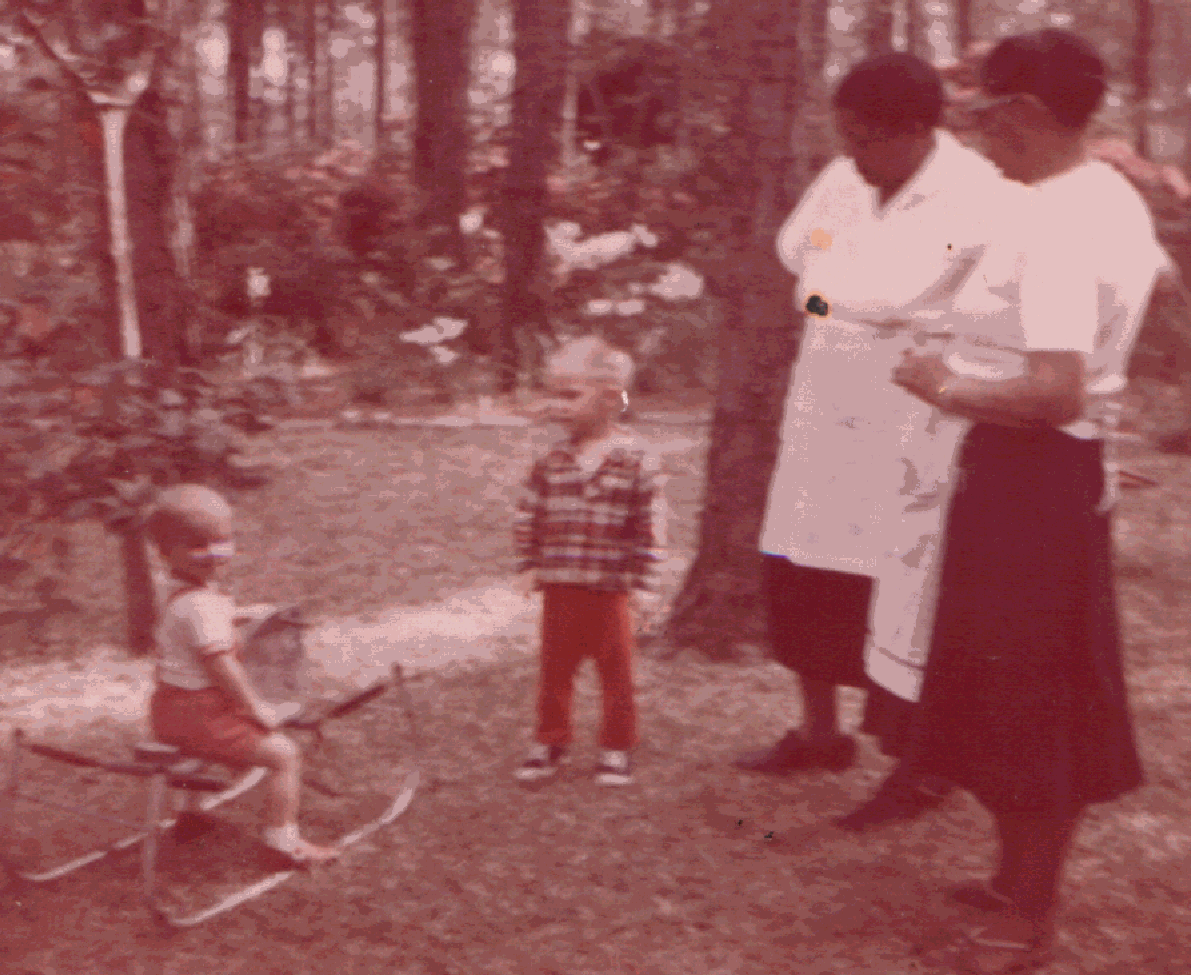
The story of growing up Downhome is incomplete without mentioning Mammy. Her
name was Mattie Martin, but like our grandmothers were Nanny and Muddin, we
loved her too much not to have a special term of endearment for her. She was
Mammy. She carried my sister Sylvia in the laundry basket as she worked around
the house. She called Elkanah "Little Man" and spoiled him rotten. She
chaperoned me when I went to visit a boyfriend in Florida and, 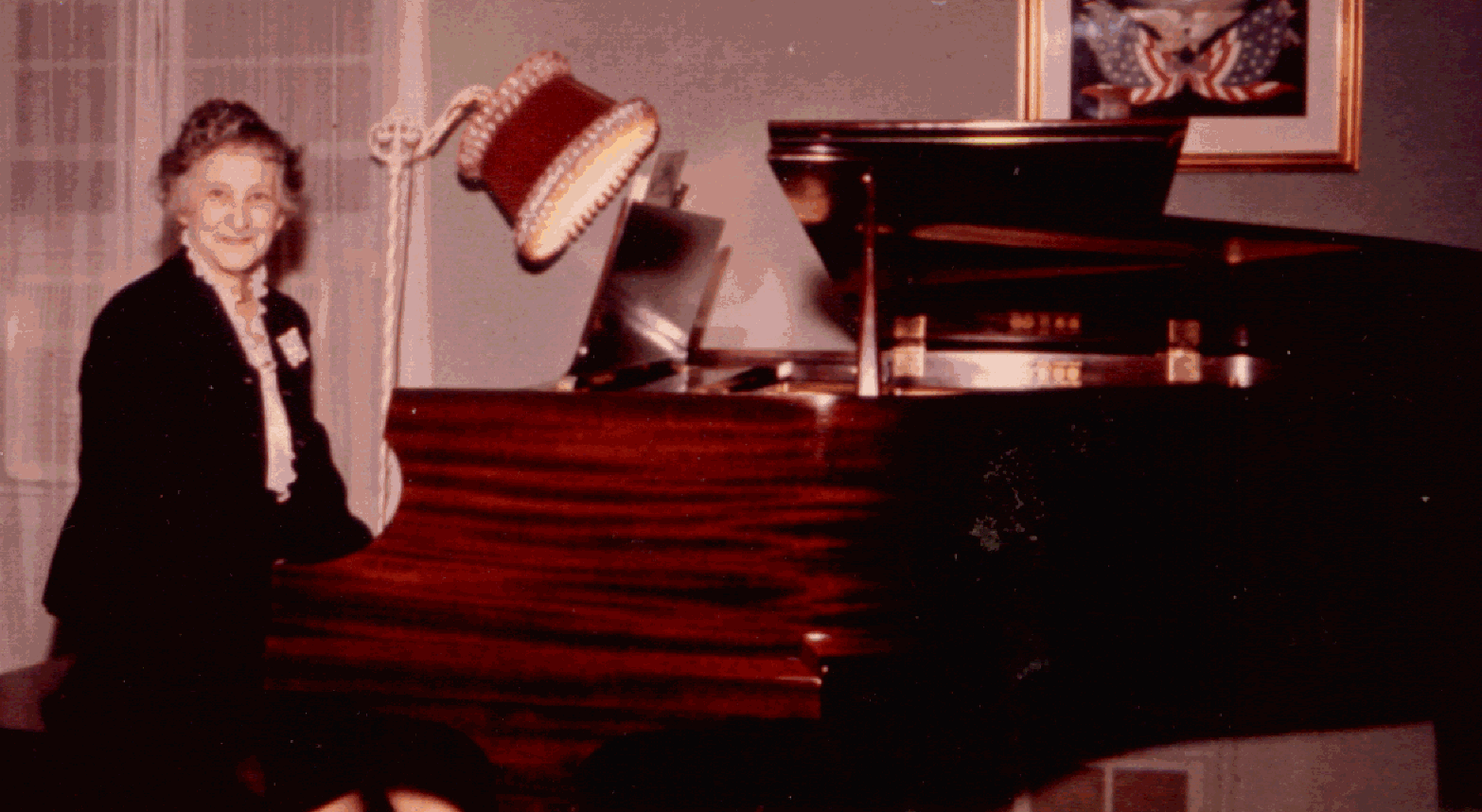 we later found
out, carried a gun under her hat to defend me. She was the best cook in Dothan,
had the softest lap, and was always ready to listen when we needed her. Her big
heart gave out, but she will always be a part of us.
we later found
out, carried a gun under her hat to defend me. She was the best cook in Dothan,
had the softest lap, and was always ready to listen when we needed her. Her big
heart gave out, but she will always be a part of us.
We took piano lessons from Ina Harrison, a neighbor who just happened to have traveled with Chautauqua. We learned tap, ballet, and ballroom dancing from Madalyn Smith. We swam and took ball room dancing at the Country Club. Mammy made teacakes for us to have tea parties for our "company." Mother built us a playhouse and we painted it with polka dots. Our children’s garden club, the Daffydillies, named for Mama’s garden club, the Daffodil Garden Club, met there. We participated in school events and went off to college as expected. Pat McLaughlin, Kaaren Taylor, Sylvia, Elkanah
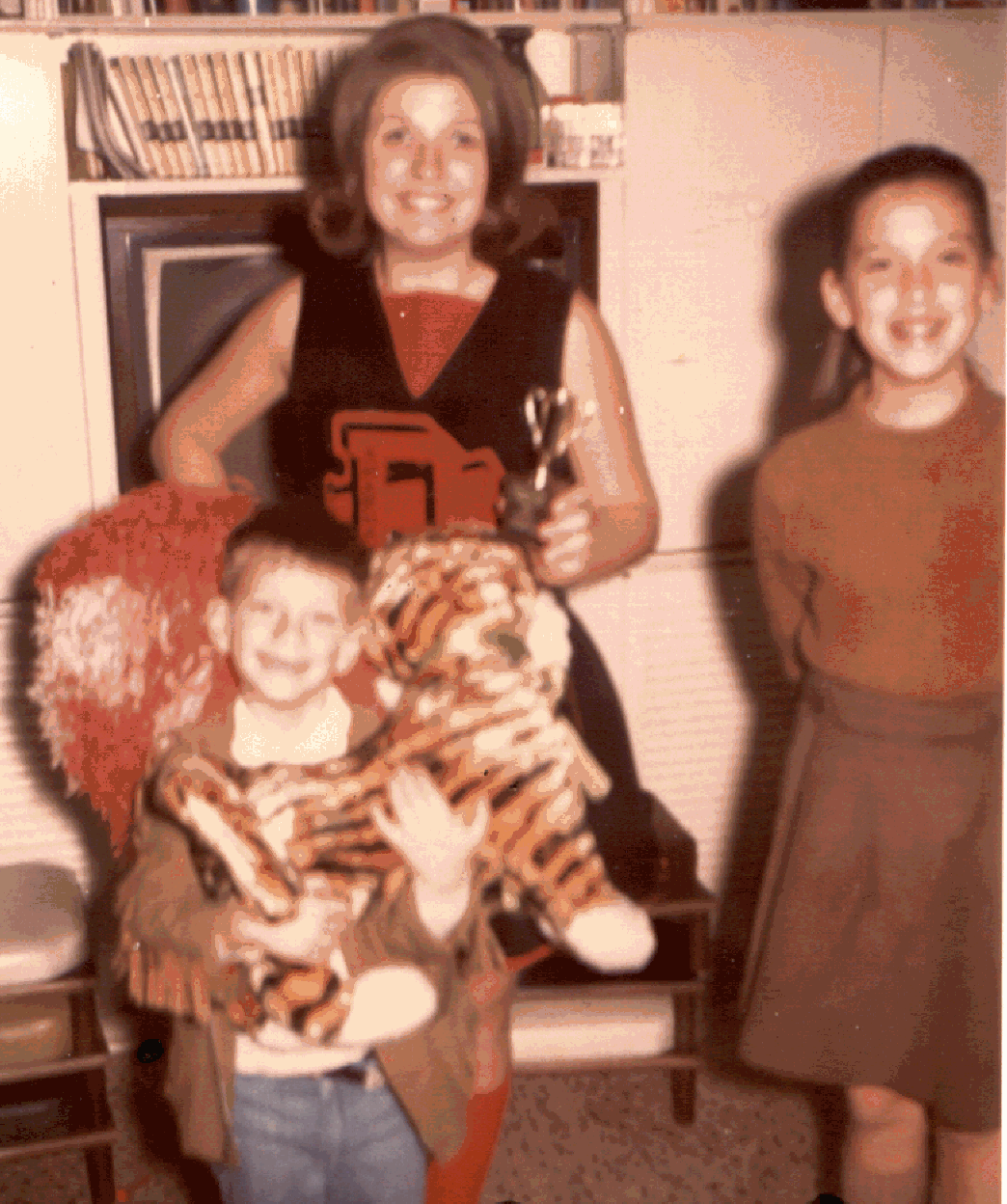 Sharman, Dothan High School Cheerleader,
Sylvia and Elkanah Sharman, Dothan High School Cheerleader,
Sylvia and Elkanah |
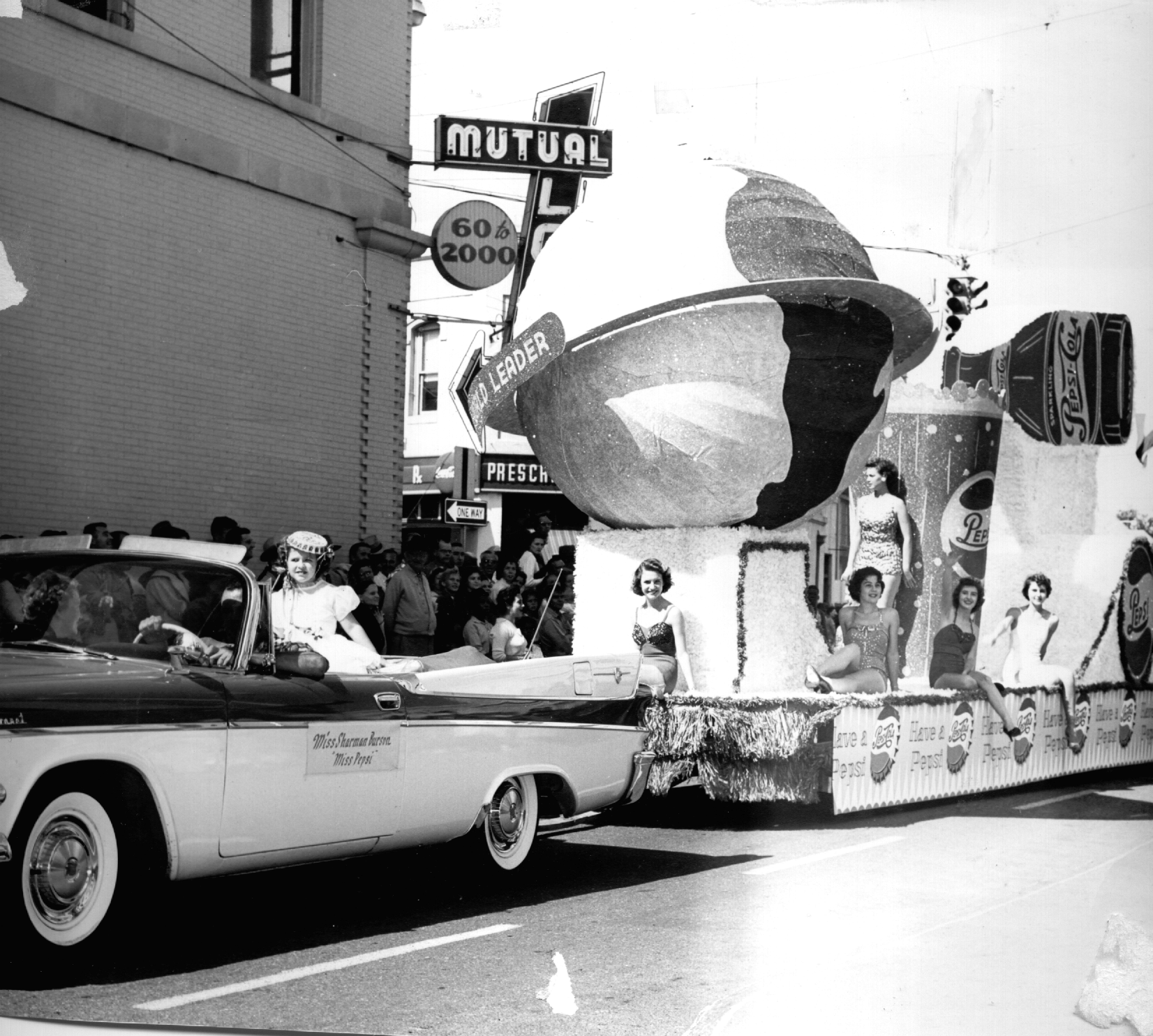 Sharman, Sharman, "Miss Pepsi" |
 Patt McLaughlin, Kaaren Hopping, Sylvia and
Elkanah at Christmas Patt McLaughlin, Kaaren Hopping, Sylvia and
Elkanah at Christmas |
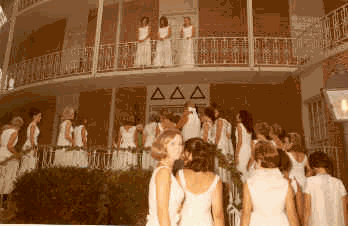 Serious night at the Tri Delta House. I
am center on the balcony. Serious night at the Tri Delta House. I
am center on the balcony. |
Dothan High School senior play, Dennis Ray, Randy, Sharma n
and Jimmy Parkman n
and Jimmy Parkman |
But most importantly we were gifted with religious faith and responsibility. We were taught that "from those who are given much, much is expected."
Elizabeth, George, Jean, Cecily, Drew, Sylvia, Eunice, Sharman, Claire Burson Moulder

This lesson came not in pious words but in example.
One Sunday on the way to our usual visit to the Parkway Restaurant for lunch after church, we saw a family sitting by the side of the road. The mother sat on a suitcase and held an infant in her arms. Two other children squatted nearby. The daddy stood with his hand on her shoulder and looked helplessly at the passing traffic. We ate lunch and our parents dropped us off for a matinee at the Martin Theatre downtown. Later when Mother came for us, we passed the spot on Main Street where the family had been. I wondered aloud what happened to them. My mother said, "Your Daddy picked them up and took them to the bus station. He bought them tickets so the family could get to the family they were trying reach. They were hungry and he fed them and he gave them money to eat on the road."
She told us they promised to pay him back the money. My father never expected to see that money again. He made the agreement to salvage the man’s pride before his children. The lesson taught that day was more enduring than the one we learned in Sunday School. The story of the traveler on the road to Jericho came alive. My daddy is an honorable man. Honorable men see other men as honorable. If the bill was not paid it could not be paid. God poured out blessings upon the man who shared his blessings selflessly with others.
There are many wealthier families but there are none richer in heritage.
How do people stay married for fifty years? Shoes were thrown and words were said in anger, but the glue that kept our family together was mutual respect, perseverance and commitment. They weathered the storms and provided the rock upon which all we knew our lives should also be was founded. They gave us our sense of place, family and purpose.
|
|