Southern-Style
|
|---|
|
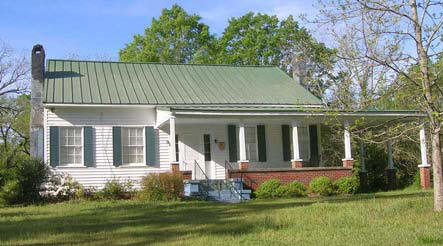
TOUR OF FURMAN, ALABAMA: A NATIONAL HISTORIC DISTRICT |
||
| APRIL 17, 2010 | ||
| Tour of
Furman Wilcox County Information Wilcox County Historical Society Palmer Cemetery Wakefield History Mount Moriah Wilcox County True Blues Flag Returns Home Consuela Lee and the Snow Hill Academy--interesting story William James Edwards biography-- founder of Snow Hill Academy (Spike Lee's grandfather) who was reared on the R.O. Simpson place in Furman, Alabama The genealogies of these Wilcox County Lines are included on this website because they are those of this webmaster. Dr. Elkanah George Burson and Elizabeth Jane Knight Burson Great Grandparents:
Elkanah Burson and Ellafare Christian Barge Burson and Napoleon Oscar Knight and Margaret Lucy Watson Knight
Great Great Grandparents:
Joseph Jackson Burson and Elizabeth Dunn Burson and George Abel Barge and Mary Ann Slaughter Barge
Lewis Jackson Knight and Catherine Palmer Knight William Watson and Elizabeth Jane McWhorter
Great Great Great Grandparents
Joseph Jefferson Burson and Leah Burson And Benjamin Dunn and Susannah Dunn
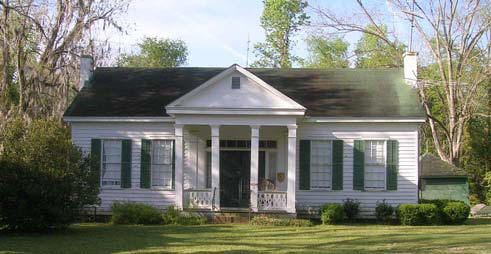
Stephen Palmer and Juliet Hartwell Palmer And Edwin Knight and Martha Comer Watts Knight
Abel Barge and
Martha Faust Barge
James Watson and unknown David McWhorter and Mary “Polly” Wardlaw
Joel Wardlaw Ramsey and Sharman Burson Ramsey David Wardlaw Ramsey and Emma Virginia Hawthorne Ramsey
|
|
1. Furman Schoolhouse - This school was built in the 1920's and served
the Furman and Snow Hill areas as an elementary and junior high school
into the 1950's. It was deeded to the Furman Civic Club in 1961 and has
served as a community center ever since.
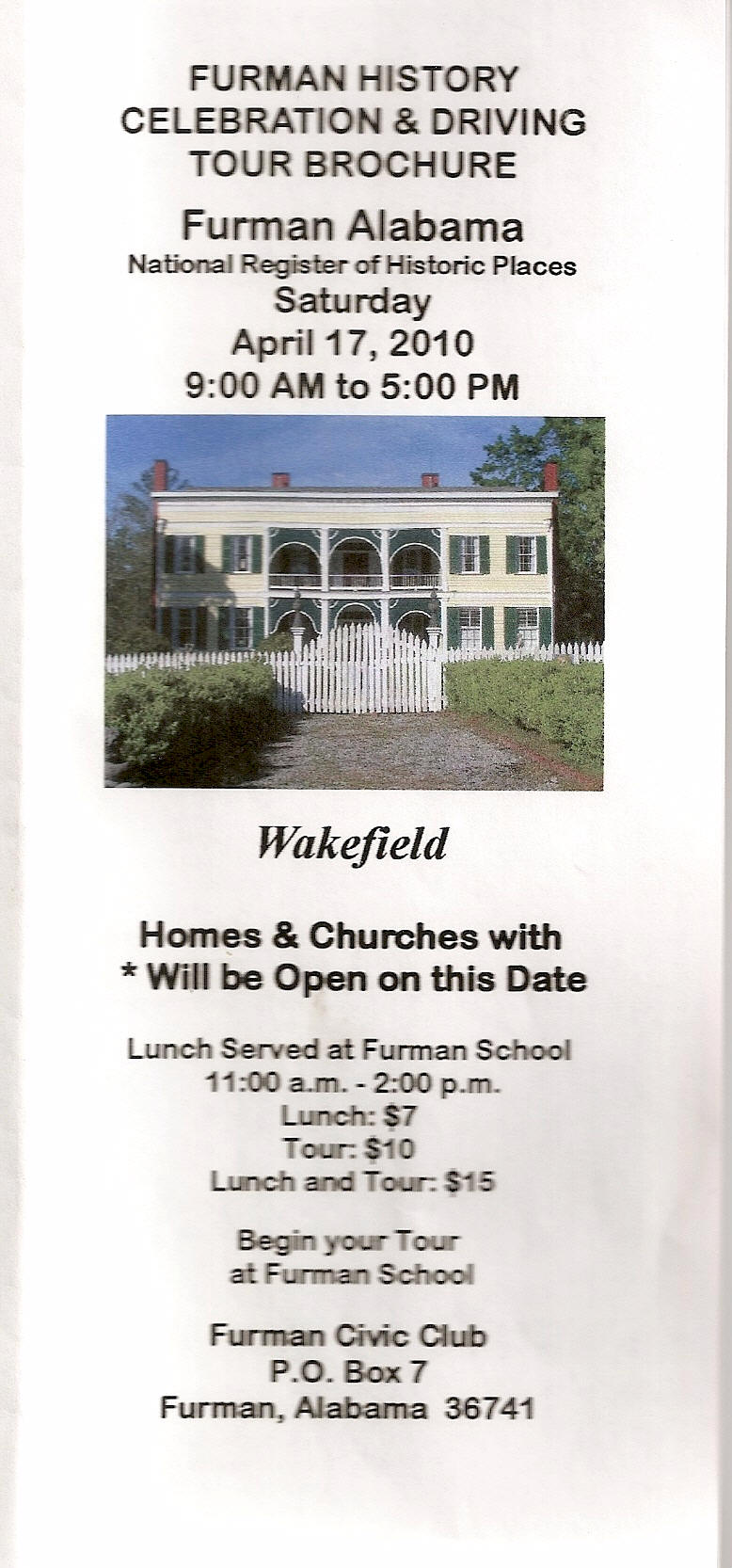
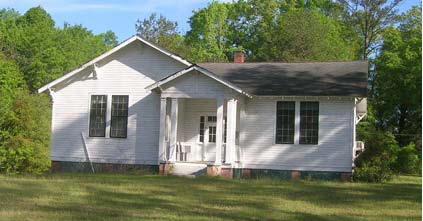
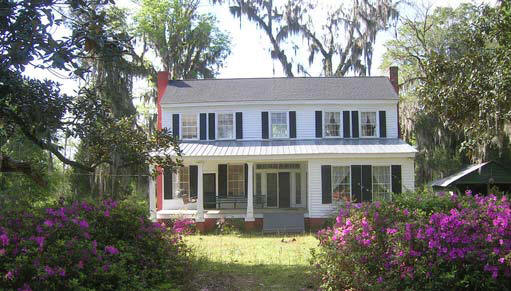
2. “Wakefield” Plantation - This beautiful antebellum home is built in a one-of-a-kind Steamboat Gothic style. The nearly 6,000 sq. ft. of living area consists of 12 rooms and 12 fireplaces, and unique porches on all sides. It was named “Wakefield” by the Gulley family which owned the home from its construction in the 1840's until it was sold to Dr. E.G. Burson in 1943. John Gulley started construction around 1840 and depleted his financial resources by the time it was completed 7 years later. The construction cost was $12,000. John Gulley then sold the home to his brother Henry Gulley, who bequeathed it to his daughter Laura Gulley. She left it to her half sisters who sold to Dr. Elkanah G. Burson. The home is now owned by Sylvia Burson Rushing, granddaughter of Dr. Elkanah G. Burson, and her husband Tom Rushing. They are only the fourth family to own this home, which is featured in the historic book “Silent in the Land”. 3. Moore-Burson-Rushing Home -This 1 ½ story gabled central passage house is of the coastal cottage type, and is located across the street from “Wakefield”. It served as the home place of Dr. and Mrs. Elkanah G. Burson until they purchased “Wakefield” in 1943. It has remained in the Burson family and Tom and Sylvia Rushing (current owners) are presently restoring it. The builder of this home was Leonard Moore.
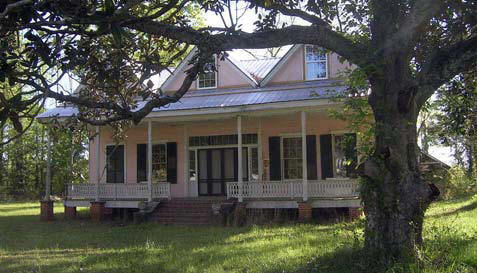
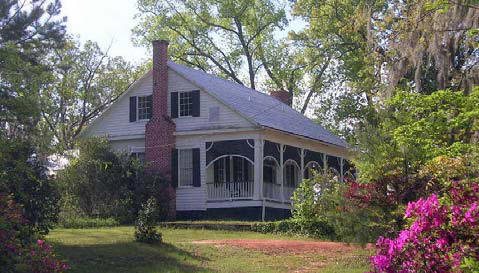
4. Palmer-Barlow-Britt Home - This “coastal cottage” is thought to
have been built in the 1830's by Stephen and Juliet Palmer and possibly
modified by Dabney Palmer around 1860. It is a classic 1 ½ story
“Carolina” cottage featuring a central passage with rooms to each side,
including a unique prayer room with gothic arched windows. The front
porch is an integral recessed porch constructed on brick bases connected
directly to the earth (Carolina Porch Style). The home also features a
wrap-around rear shed porch flanked by the kitchen. There are two large
bedrooms upstairs. It was owned by the Barlow family for many years
until purchased by Mitchell and Jennifer Britt of Huntsville several years
ago. They are continuing to restore the home at this time.
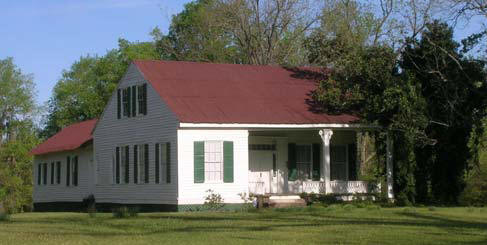
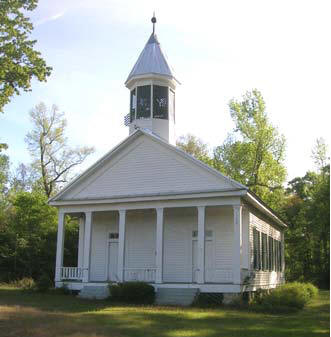
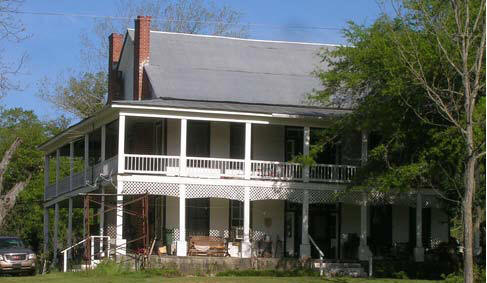
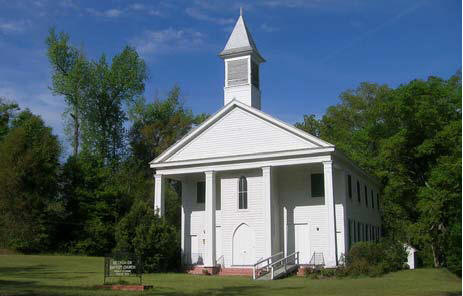
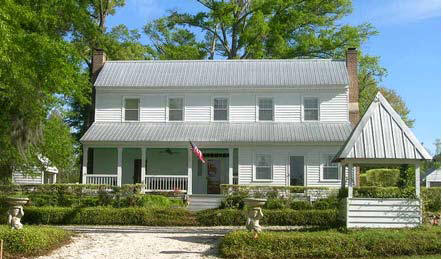
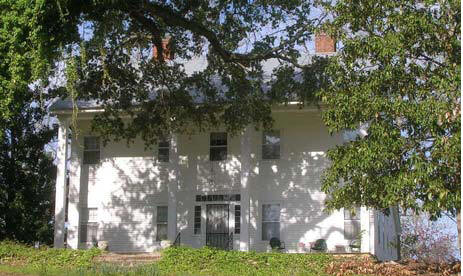
5. Palmer Cemetery - This cemetery was started in 1831 when Oscar Palmer, the 10-year old son of Stephen and Juliet Palmer, passed away. He was buried in the family garden just south of the Palmer home which still stands and is now owned by Jennifer and Mitchell Britt of Huntsville. You may view the names of all those persons buried in this cemetery and other cemeteries on tour by logging onto www.wilcoxwebworks.com and checking out the cemetery links. 6. Watson-Pryor-Moorer Home -This 1 ½ story frame home features end gables, two piles deep, double front doors with “Italianate” panels with rounded tops, front door sidelights and transom nine-over-nine sash windows throughout except in the end gables, which have four- over-four sash windows. The original construction date was circa 1860 and several renovations and upgrades have been made over the years. 7. McCondichie-Stabler Home -This home was built by Herbert and Emma Farrior McCondichie, members of one of the pioneer families of Furman. The home was built in the 1870's and features heart pine lumber, and is typical of those area homes built after the War Between the States. The home was purchased by Lamar and Miriam Stabler in 1928, and has remained in the family since that time. It originally consisted of four duplicate rooms in front, separated by a large hallway extending through the house. A dining room and kitchen were attached to the rear. Extensive remodeling was done in the early 1920's to “modernize” the home, including enlarging the parlor, placement of French doors between the living and dining room, and the addition of the carport. 8. Purifoy-Lipscomb Home -This home was built around 1840 by the Purifoy family, one of the earliest to settle Wilcox County. Its style is similar to several in the Furman area, and is almost identical to that of “Fox Hill”. It was probably built by Edmond Hobdy, and remained in the Purifoy family until the Hollemans purchased it in 1987. John and Kathy Estes purchased the home in 1998 and sold it to the Robert Lipscomb family in 2000. The home is famous for the “man-in the-well” story featured in the book by Kathryn Tucker Windham, “Thirteen Ghosts of Alabama and Jeffrey”. The old well site is still visible in the back. 9. Furman Methodist Church -The original church building was constructed in 1857 on the present site of land donated by Mrs. Sarah Patton McCondichie. The current building was finished in 1882, and has served the Furman area ever since. It ceased to be an active church in 1998, but it still has an annual service each April with many of the descendants of the original founders coming back for this event. 10. Perdue-Williams-Estes Home -This home was built around 1895 by a lumber entrepreneur named Perdue. Its conservative building style belies the construction date, as it would appear that it should have been constructed much earlier. The home is a two-story frame end gabled central passage house two piles in depth, featuring a two-tiered wraparound porch on all four sides. It also features four brick exterior chimneys, flush board siding, balustered railing and jigsaw work brackets on the upper porch tier, decorative latticework arches on the first floor elevation, double front and rear doors with sidelights and transoms on both stories, with a one room kitchen wing which abuts the rear porch. The home was owned by the Williams family for many years, and is now owned by Jim and Dora Estes. 11. Bethsaida Baptist Church - Bethsaida Baptist Church was founded in 1831 at a site very close to the present building. Elder Hawthorne was the first pastor, and some of the founding families were the Albrittons, Lees, Purefoys (Purifoys), McCondichies, and Fowlers. Mr. A. Scarbrough sold the property to Edward Hobdy and Dr. William Gulley, who then donated the property to the Baptist Church. It was on this site that the present building was erected between 1858 and 1860. There were many “bondsmen” who worshiped in the upstairs galleries. During the late 1800's and early 1900's, the membership approached 150 members. In 1920, Furman was a bustling community featuring several doctors and numerous businesses. The 2010 church roster consists of 21 members! 12. “Fox Hill” - Carter-Cunningham-Wilson-Bell Home - This home was constructed in the late 1830's or early 1840's by either Addison Scarbrough or Edmond Hobdy. Mr. Hobdy built several homes in the area during this period. The style is “Plantation Plain” with shed rooms across the rear and a “prophets chamber” room in the right front. Much of the original glass remains in the house. All rooms feature original wainscoting and most rooms have faux graining on the doors. This home was stabilized and partial restoration accomplished by the Wilson family. Don and Katrina Bell purchased the home in 2001 and have restored it to its present condition, in addition to constructing the dependencies located on the grounds. 13. Trails End -This beautiful home was built in 1876 by Elkanah and Elafore Barge Burson on land inherited from his grandfather Joseph Burson who obtained the land through a land grant signed by Andrew Jackson. Elkanah served as an officer in the Confedarate Army and was with General Lee at Appomattox (see previous account). After the deaths of Mr. and Mrs. Burson, the home was deeded to their granddaughter Elliece Burson Williams Tucker who lived here with her family for her entire life. The home was sold to John and Kathy Estes in 1999 who have modernized the interior but left the exterior in its original form. The home is a 1 1/2 story frame and gabled central passage house of the costal cottage style, featuring a recessed porch on piers resting on a wood plank porch floor. The front door features sidelights and transom, and there are nine –over-nine windows throughout.
14. Purifoy-Lee-McCoy Home -This splendid antebellum home, known
as “Patience Plantation”, built in simple Federal style, with Greek
Revival elements, encompasses around 4,000 square feet of living space.
The usual Doric boxed columns are seen across the front, with the
original double portico having been removed in the late 1960's during the
restoration work done by George and Ruth Carlin who had purchased the
home in 1966. Ruth Cunningham Carlin was a native of Furman, and
grew up in “Fox Hill” described previously. The Carlins did extensive
work on the home between 1966-1978. .Frank Purifoy, the fifth son of
John Purifoy, chose this homesite and began construction around 1841.
He wed Nancy Thigpen in the Spring of 1841, and the newly married
couple moved in just before the birth of their son John in 1842. Nancy
gave birth to three more sons before her death in July 1846, with the
youngest son being only a few months old. Frank married Penelope
Moore a few months later, and they had four sons together. Frank died in
1858 at the age of 40 years. Penelope sold the home and 822 acres of
land to Frank’s youngest sister Patience Caroline and her husband John
Allen Lee in 1859. .Reverend Lee died in 1863, and Patience and the
11children continued to live in the house until she sold it and 160 acres to
Lizzie Cox in 1887. Several families owned the home until the Carlins
purchased it. The home is now owned by bill and Cindy McCoy.
15. Cox-Robbins-Kennedy Home – This one-story frame end gabled Greek Revival house features double front doors with sidelights and transom, nine-over-nine sash windows, front pedimented portioco type porch over central bay piers r4esting on wooden plank porch floor, and stuccoed brick chimneys. This house is one of five double pile central passage end gabled houses in Furman, and is believed to be the oldest, having been constructed circa 1855. This home is currently owned by Elton and Anne Kennedy. 16. Old Snow Hill Cemetery -Many of the founders of Furman - the Gulleys, McCondichies, Purifoys, etc. -are buried in this cemetery located on the original Furman town site - a high hill located north of present-day Furman. The builders and original owners of many of the buildings on tour today rest on this picturesque hill, with the earliest recorded burial being 1825. As noted on the map, turn right on the county gravel road across the highway from “Patience Plantation” and follow the signs to get to this site. 17. Purifoy Cemetery -This was the family cemetery of the Purifoy family. Their home was located directly across the road, and was moved to Pine Apple in 1935. As noted earlier, John Purifoy served in the Confederate Army with distinction. Subsequently, he was Judge of Probate for Wilcox County , State Auditor, State Treasurer, and Secretary of State.
|